Monday, February 6, 2012

Parlors from Waterloo Row 1817, Baltimore, Maryland

Front parlor


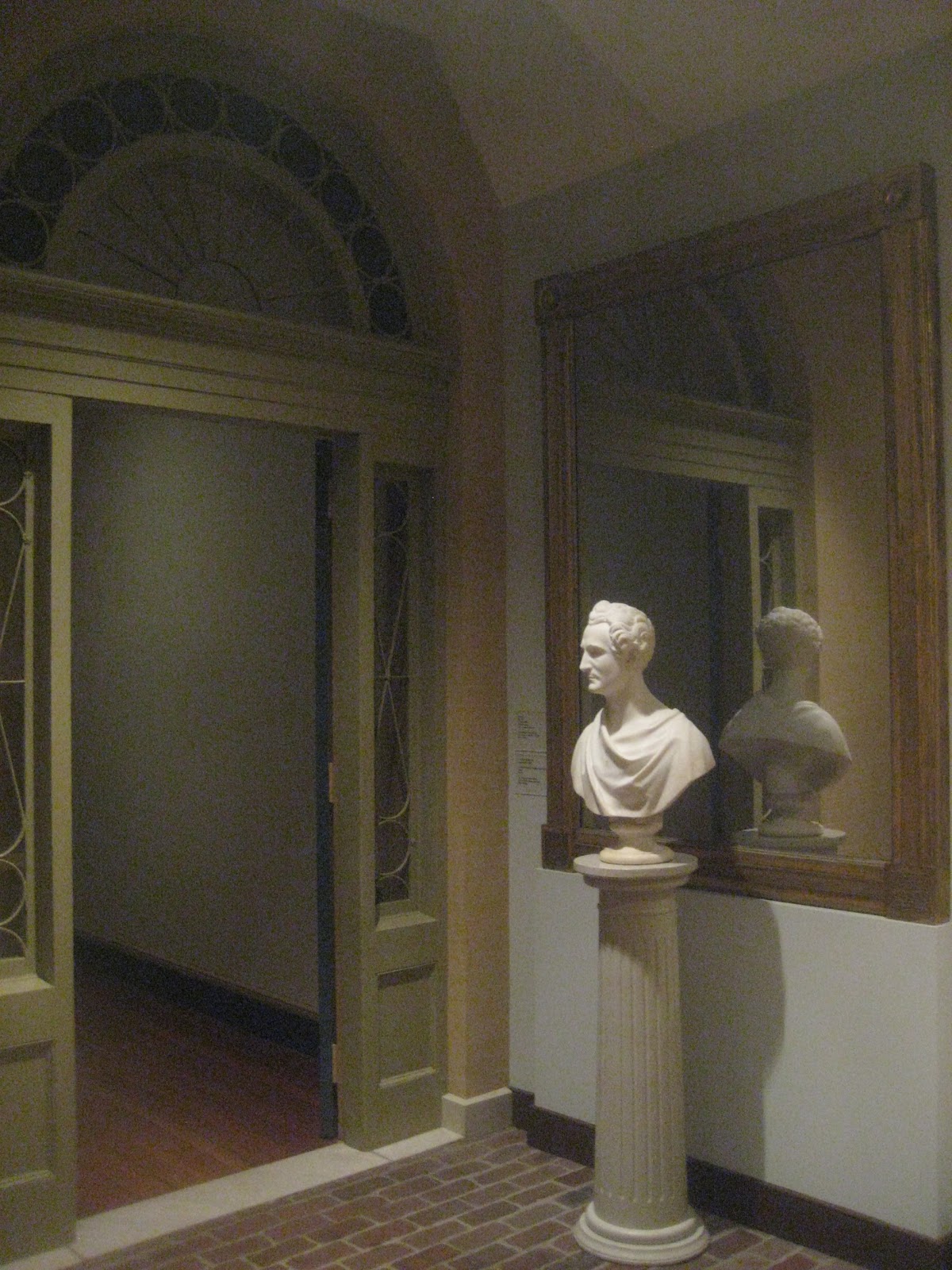
One of my favorite period rooms at the Baltimore museum of art is the first floor plan from one of the 12 Wateterloo Row houses built in 1817-1818 in Baltimore. The Federal style row homes were built by America’s first native-born architect Robert Mills who won the architectural competition for Baltimore’s Washington monument and latter designed the Washington Monument in D.C. In 1815 Mills moved to Baltimore from Philadelphia where he was working with Benjamin H. Latrobe.


Waterloo Row FROM A WATER COLOR PAINTED IN 1831

Photo of Waterloo Row at North Calvert Street in Baltimore Maryland. Nice view of the street with houses and old cars in view. Part of an old Pepsi billboard ad can also be seen. Photo dates to 1936.


Mills was familiar with Baltimore because he had worked with Latrobe as clerk of works on the new Catholic Cathedral designed by Latrobe. Between 1815 and 1820 Robert Mills became one of Baltimore’s most sought after architects. Unfortunately the Washington Monument is the only surviving architecture in Baltimore by Mills.


Of his many domestic buildings he designed in Baltimore only a row of 10 houses out of a original 12 overlooking his Washington Monument was still standing in 1970. The ten that was left was demolished in the name of urban-renewal.


Front Facades


The Baltimore Museum of art received a bequest of early 19th century furniture used and made in Baltimore in one of the homes as well as architectural items from the row houses to recreate a first-floor plan of one of the Classical homes of Waterloo Row. Including entrance doorway, woodwork. Plasterwork, King of

Prussia marble mantels to recreate the double parlors, entrance hall and stair hall in the Baltimore Museum of art.


Out of the ten building not one house had all of its original Classical/Federal architectural elements intact at the time of the 1970 demolition. To reconstruct a period 1817 interior original material had to be taken from several remaining houses.


Stair Hall

Robert Mills was born in South Carolina in 1781, during his early career Mills studied with James Hoban who designed the White House, Thomas Jefferson and Latrobe. From theses architects he learned Irish and English late Georgian style. The Classical Revival styles as interpreted by English Palladians, Kent and Burlington. But his greatest influence was working with Latrobe in the new Greek Style.


The 12 townhouses of Waterloo Row were speculative real estate with Robert Mills as one of the investors. The foundations for Waterloo row and there servants wings were probably laid in early spring 1817 the houses were completed by autumn of 1818. Each house was priced at $8,000. Making them the most expensive homes in Baltimore for the time. The beautiful and well built homes failed to sell to effluent Baltimoreans because they were considered too distant from downtown at only being about 5 blocks away from the heart of the city.


The name Waterloo refers to Napoleon’s defeat at Waterloo in 1815 but as well as the losses incurred by the speculative builders. The investors also had a hard time renting out the newly built homes.


Elaborate plaster ceiling medallion


The homes were three and a half stories in height over a basement level. The entrance doorway was approached by a flight of six white marble steps with ornamental iron railings set parallel to the facades. The front double doors were flanked by sidelights and topped by high and broad fanlights.


Sunday, February 5, 2012

Christmas time at the Hopkins Home

On the marble base of a gilt-wood pier table are mid 19th century Old Paris porcelain figures of Queen Victoria and Prince Albert by Jacob Petit with a glitter Christmas tree in-between, reminding us that the Christmas tree of today was first made popular in the US by the British Royals. The Christmas tree is a German tradition brought to England by German Prince Albert.   


This engraving from Christmas of 1848 of the Royal family around a Christmas tree at Windsor Castle was published by the London Illustrated News and went viral as we would say today. Everybody in England and America had to have a Christmas tree. The triangular shape representing the trinity.  


A 1820’s gold leafed “Thomas Sully” framed pier mirror sports a brass, green & red glitter bell wreath at top.

A 1820’s English portrait of a boy is garnished with a sprig of local kumquats as well as a gilt acanthus leaf bracket holding A Rococo Revival Old Paris porcelain vase


On a early 19th century Baltimore fancy pier table a rare 1820’s American Classical porcelain tea set attributed to the Decasse & Chanou factory of New York city has sprigs of kumquats in-between the pieces.

Displayed on a Baltimore fancy pier table is a rare New York city made 1820’s white and gold porcelain tea set attributed to the short lived  New York city porcelain factory Decasse & Chanou

The Black dinning room mantel painted to look like black slate is simply decorated with citrus and kumquat sprigs, the 1851 portrait has a burgundy and gold bow at top.     

Detail of mantel top decorations with citrus and fresh kumquat sprigs


A 1830’s Old Paris porcelain painted plaque in a Louis XVI frame has cypress sprigs and a single red Camellia flower from my garden as decoration.


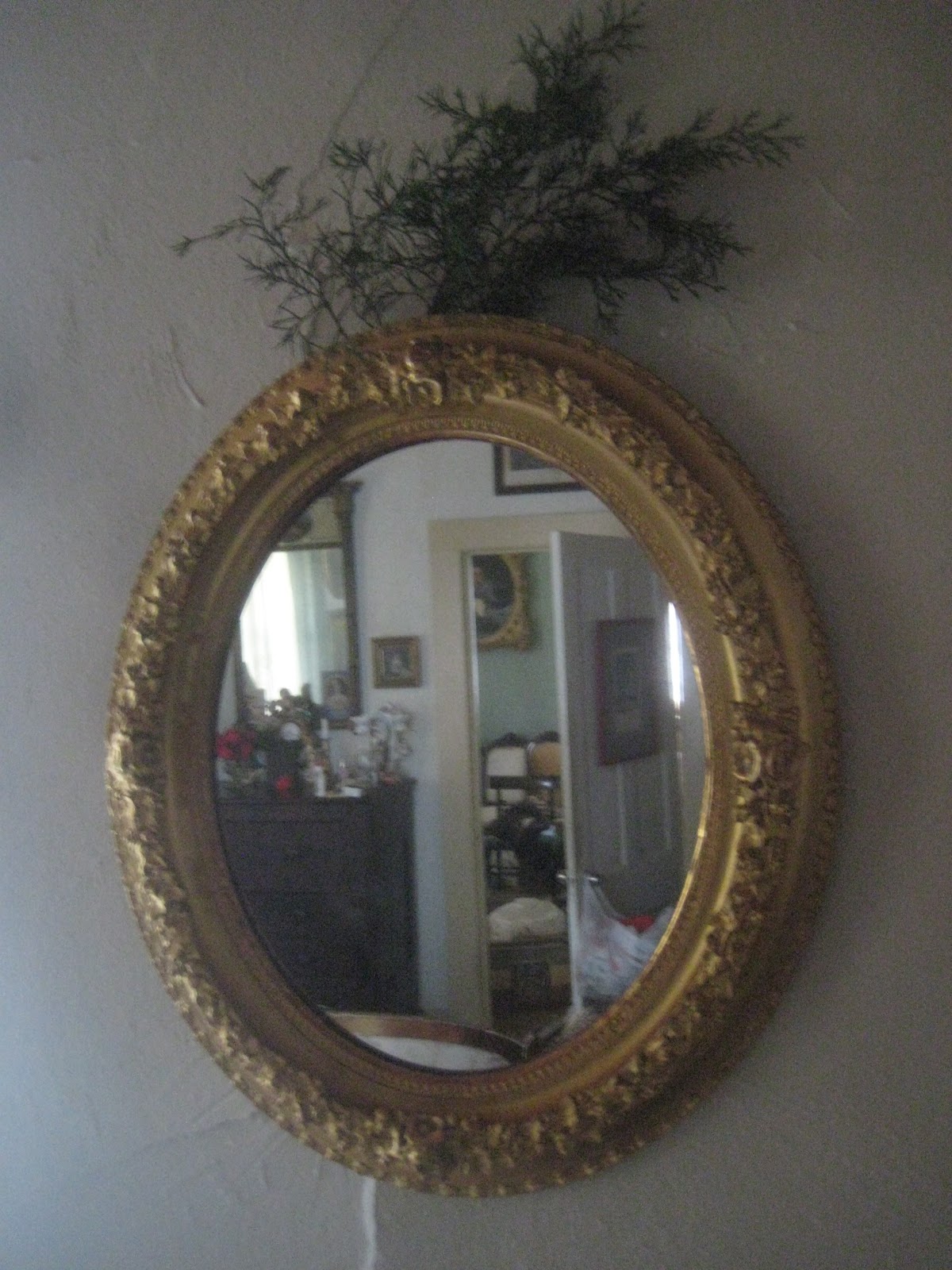
A ornate French Napoleon lll gold leaf oval mirror has a sprig of cypress at the top.  

In a corner of the bedroom a pair of 18th century French wax profiles of Marie Antoinette & Louis XVI receive a red camellia while the Round hand colored engraving in the center by Angelica Kauffman in it’s original carved gilt-wood frame receives a sprig of cypress  

At the Top Marie Antoinette

French King Louis XVI

The Engraving in the center is by Angelica Kauffman in it’s original carved gilt-wood


In the corner of the Winter Bedroom, an Empire dresser is decorated with a bouquet of red Camellias in a American cut glass vase. The “Thomas Sully mirror has cypress sprigs as well as a burgundy bow. The framed engravings of portraits by Neoclassical French artist David also has cypress sprigs.     

Detail of  bouquet of red Camellias in a American cut glass vase. The framed engravings of portraits by Neoclassical French artist David also has cypress sprigs.     


A mahogany work table used as a nightstand has a white glitter Christmas tree

In the Winter Bedroom over the bed a 18th century French pastel portrait of a young Aristocrat is decorated with a turquoise and silver bells hanging from top of the frame. On the bracket the 18th century porcelain tea pot from Marie Antoinette’s factory Rue Thiroux is surrounded by fresh Christmas greenery.  


Behind a beautiful Christmas Angel is a Period French Empire needlepoint of the Madonna & child in it’s original Neoclassical gilt-wood frame.


A 1840’s portrait miniature on ivory of a Southern Belle has a red camellia at top as decoration

A art glass ornament hangs from the skeleton key of a 1820’s Mobile, Alabama made plantation desk.


Another art glass ornament hangs from atop a carved gilt-wood altar candlestick  

On a home altar, a mid 19th century Bohemian Emerald glass chalice shaped vase with portraits of Queen Victoria’s daughters painted around it has a festive touch of red camellias.      


On a home altar, a 18th century French Provençal ivory crucifixion gets sprigs of holly   


As well as a Old Paris porcelain figure of a 18th century Dandy

A 18th century Louisiana Cherry & Cypress cabriole leg table is nestled in the middle of a pair of English Regency Mahogany Classical chairs    

Atop the 18th century Louisiana Cherry & Cypress cabriole leg table is a Holiday tāt`å`tāt for two  

Atop the 18th century Louisiana Cherry & Cypress cabriole leg table is a Holiday tāt`å`tāt for two  

A stack of early Victorian engravings of  English Sovereigns

A 18th century cornflower and gilt-star decorated dish holds Pecan Divinity atop a plaster Ionic capital  

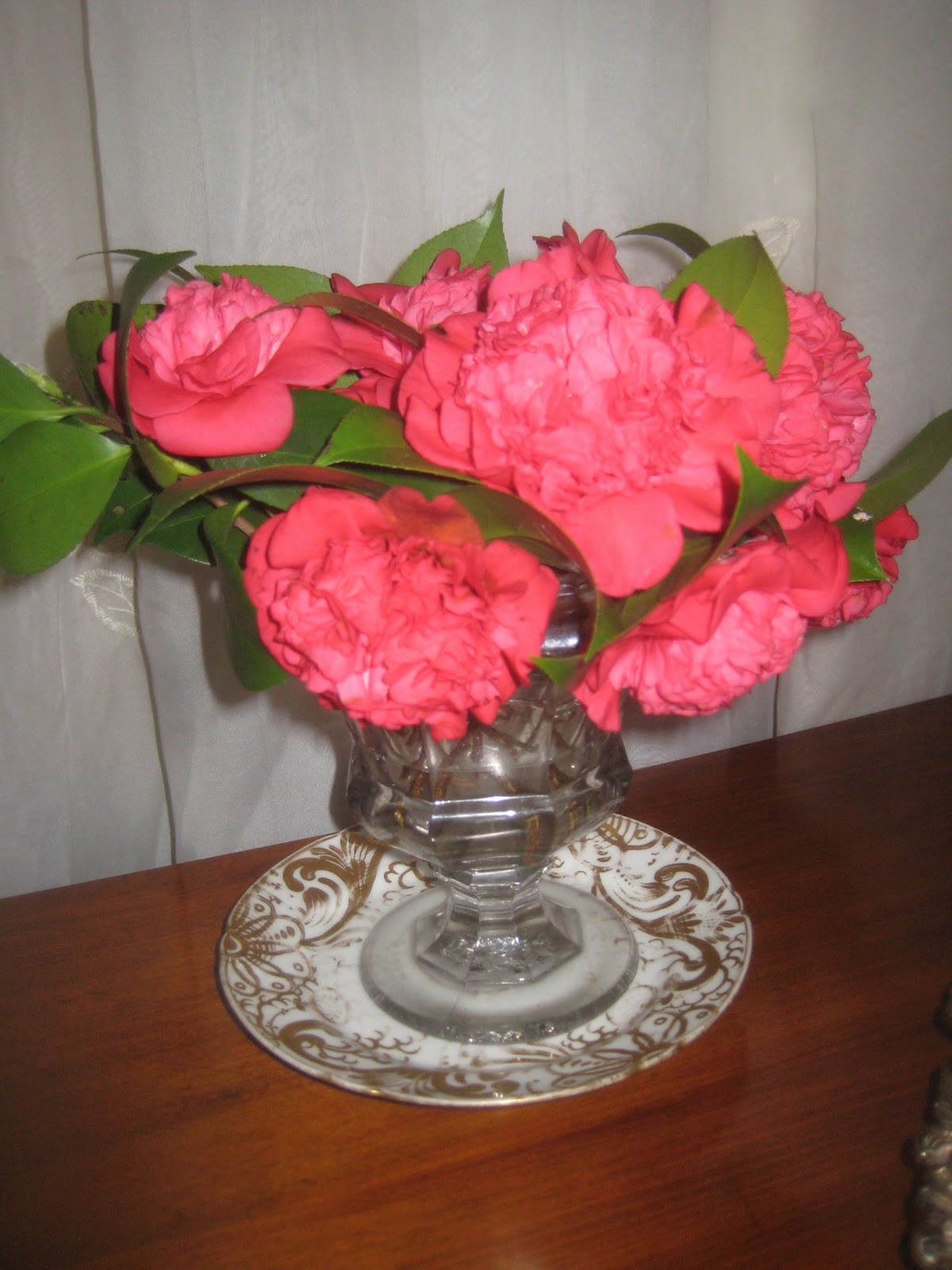
A bouquet of red camellias sit atop a gilt Old Paris porcelain plate.    


On a Victorian silver tray a 19th century French gilt Baccarat crystal Swirl pattern pitcher awaits a Holiday beverage  

A late 18th century English lusterware bulb pot is sprouting with paper whites

A English Regency Mahogany Classical chair holds Rococo Revival gilt decorated Old Paris desserts plates.    

A French 1850’s wax figure of baby Jesus under dome has decoration at top of a cranberry wreath

The 19th century wine colored damask drapes and Napoleon III velvet covered side chair ads to the festive sprit of decoration


A 1850’s Rococo Revival gilt pier mirror decorated for the Christmas  season

A French Paris porcelain figure of Queen Victoria on the base of a pier mirror  

Christmas cards displayed on the top of a Empire dresser